
Microsoft’s Copilot Cowork: The first one’s free.
Cowork is a good puppy. Explain the separate usage bill before the department gets attached.
Try it. See what it can do. Find a few things you don’t want to do without it.
Then let’s talk about the bill.
It reminds me of the old “puppy sale” pitch: take the puppy home for the weekend. See how it goes. You can always bring it back.
Sure you can. By Sunday the kids have named it, it has a spot on the couch, and returning it would require a family intervention.
Cowork is the office version. Let people try it. Someone finds a use for the weekly report. Someone else gets it helping with meeting prep. Pretty soon, “let’s experiment” has become “we use this every Monday.”
Then comes the separate usage bill. Now you’re the person who has to tell the department we might be taking the puppy back.
The problem is that it’s a good puppy.
Except you were already paying for Copilot. The free part was trying Cowork without the additional usage bill.
From “come try this” to “that costs extra”
On March 30, 2026, Microsoft opened Copilot Cowork through its Frontier early-access program. The pitch was an agent that could take on longer, multi-step work across Microsoft 365: describe the outcome, let Cowork plan and carry out the work, and steer it along the way. Microsoft highlighted repeatable workflows, including monthly budget reviews. Microsoft’s Frontier announcement
That is exactly the kind of thing you want employees to experiment with. Find a tedious job. Try a different approach. Share what works.
Then came general availability on June 16. Microsoft said Cowork required a Microsoft 365 Copilot license and additional usage-based billing in Copilot Credits. Qualifying tenants that had used Cowork during the March 30–June 16 Frontier period received a grace period until July 1. That gave those early adopters about two weeks from the announcement to the end of the billing grace period. Microsoft’s general-availability announcement
This felt underhanded. You encourage people to experiment inside a product they already pay for, let them discover something genuinely useful, and then introduce another bill. Did Microsoft always intend to charge separately, or did the preview change the economics? The public record doesn’t settle that. Either way, customers should learn about the business model as clearly as they learn about the features.
Same app. Different billing.

Microsoft’s own demo shows Chat and Cowork as neighboring choices in the same interface. This is the subscription-backed work experience shown in its launch material, not a comparison with consumer Copilot. Source: Microsoft’s June 16, 2026 announcement. Animation viewed September 16; exact capture date not supplied.
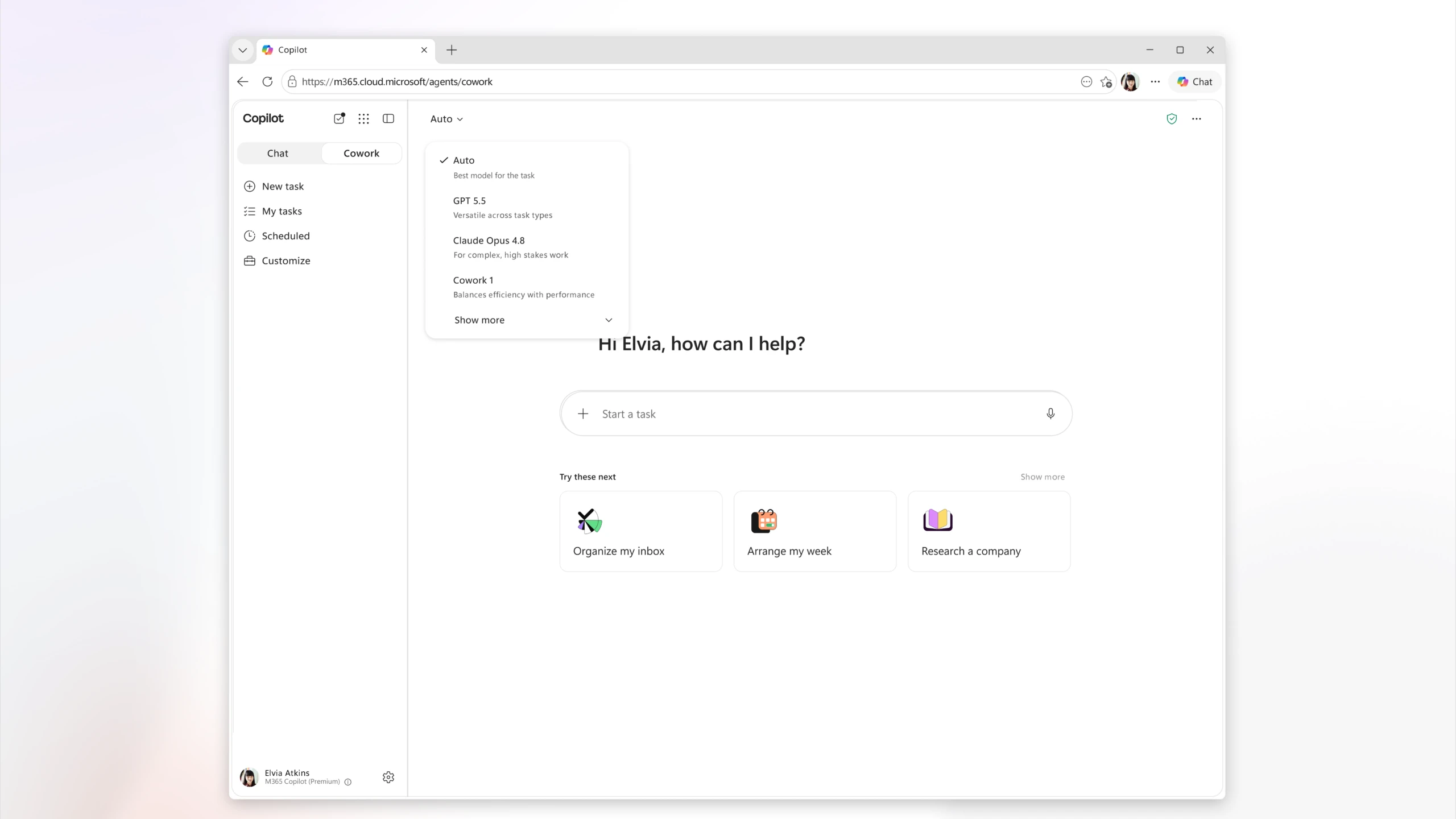
Cowork’s task screen, as illustrated by Microsoft in the same June 16 announcement. The separate billing requirement comes from the accompanying pricing explanation; the screen itself is not proof of a particular customer’s license or charges. Microsoft-supplied image, viewed September 16, 2026; exact capture date not supplied. Select either visual to open it full size.
You’re asking people to experiment with two things
One is the work. Can Cowork handle this task well enough to be useful?
The other is the cost. What will doing that task every Monday actually add to the bill?
Picture a department that finds a useful way to prepare its weekly review. Someone shares the approach. Five colleagues try it. Then it becomes part of the routine.
That is the adoption story leadership keeps asking for. It is also the moment a successful experiment can become a recurring expense nobody included in the original license discussion.
Now the person encouraging everyone to try AI has another explanation to give: yes, we bought Copilot. Yes, this is called Copilot. Yes, this part costs extra.
The branding is doing a remarkable amount of work. Finance would like it to do some accounting.
Does every Frontier experiment come with another bill?
No. Frontier is an early-access program, not a single pricing plan.
Researcher and Analyst came through Frontier and reached general availability in June 2025 with up to 25 combined monthly queries included for Microsoft 365 Copilot license holders. That was an included allowance, rather than Cowork’s separate usage bill. Microsoft’s Researcher and Analyst launch announcement
Worth a look: Scout wants a desk of its own
Microsoft has another puppy in the window. Scout is a desktop assistant that can work with files, a browser and Microsoft 365. That deserves a proper test: give it a messy folder and a useful job, then see how much work is actually left for you. Meet Microsoft Scout.
Before bringing this one home, check the entry requirements. Microsoft’s preview setup lists both Microsoft 365 Copilot and GitHub Copilot Business or Enterprise licenses, plus organizational enablement. That is an additional requirement, not evidence of another free-preview-to-paid reversal. Check access and installation.
Read the terms before getting attached
There are signs of more visible cost information: Microsoft’s current Frontier feature page puts a Copilot Credits link alongside Cowork’s model-choice announcement. But a link to billing guidance does not establish that Microsoft changed its policy because of customer complaints. Frontier features
The practical rule: read the terms for the particular feature. “Frontier” tells you it is early. It does not tell you what the second month costs.
Put the price beside the promise
Microsoft’s launch announcement describes spending limits, usage alerts, and per-task credit visibility. Those controls matter. Administrators should check what is available and configured in their own tenant before expanding use.
Run a representative task. Inspect the result and its actual consumption. Repeat it enough to understand the variation, then estimate what regular departmental use could cost. Treat that estimate as a planning number, not a guaranteed bill.
And tell employees what changed. They should know whether they are testing something temporarily included, using a paid entitlement, or starting work that generates another charge.
A useful agent can absolutely be worth paying for. Give us enough information to make that decision while we are learning to use it.
Microsoft, if the first one’s free, put the price of the second one next to the button.